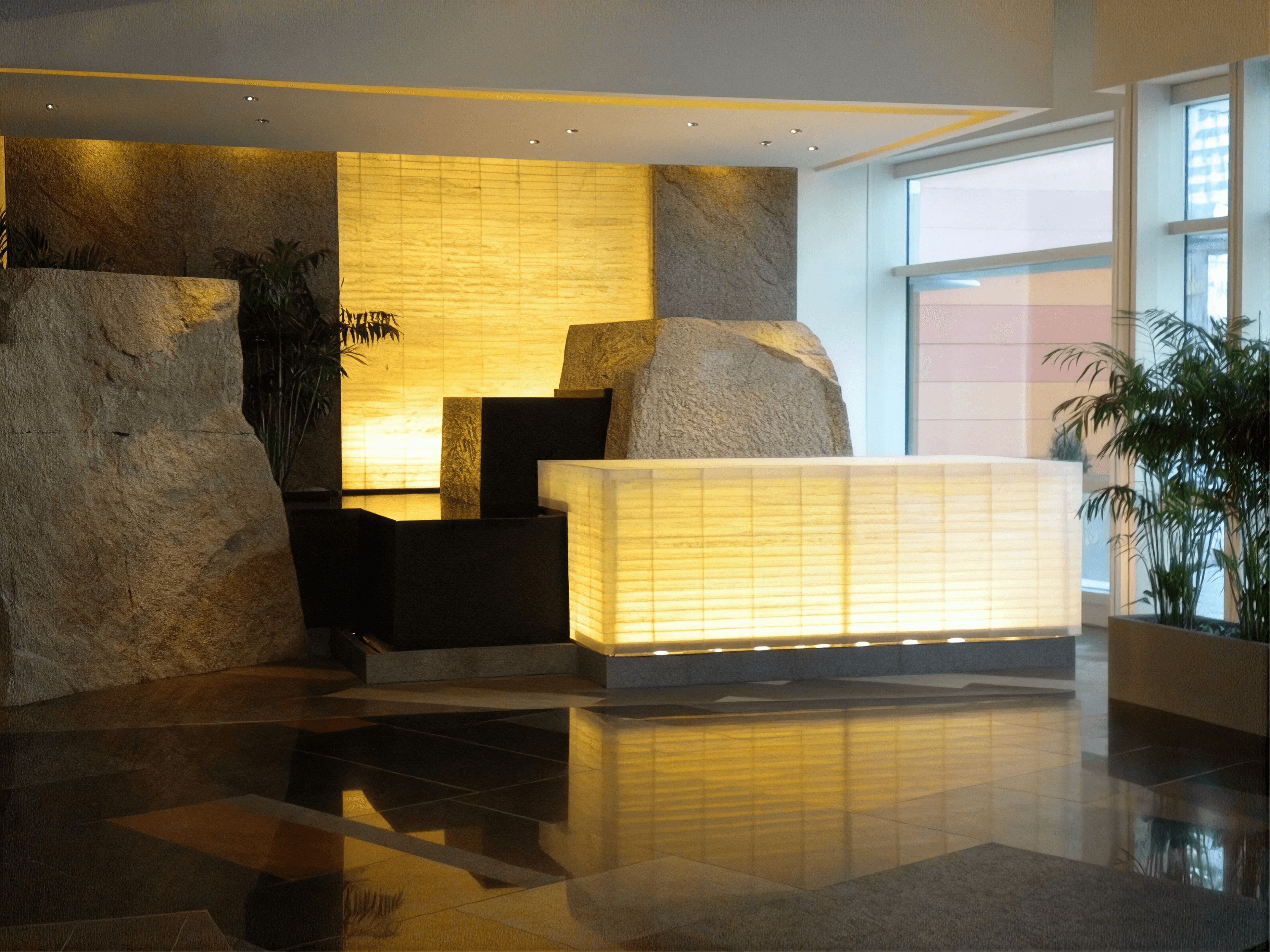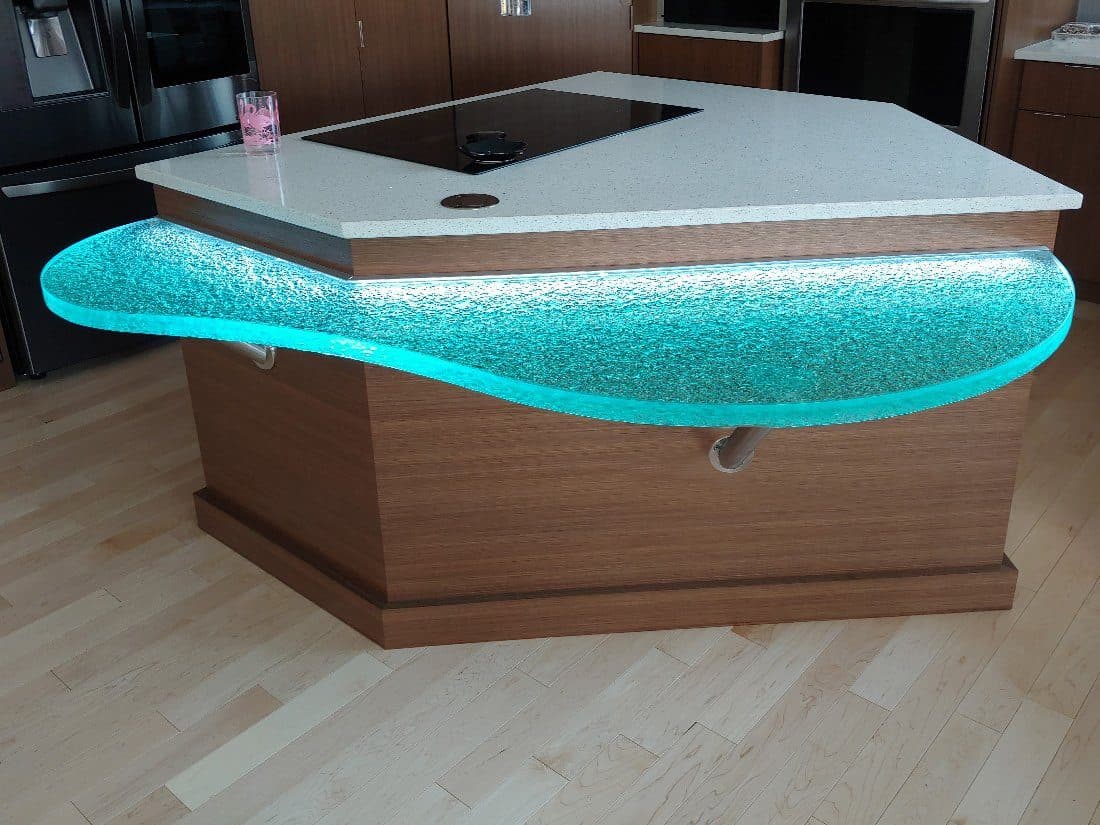
The boom of backlighting interior fixtures is at its peak, creating a design revolution. Glass countertops, in particular, unite functionality and enchanting visual impact. The secret is an out-of-the-box implementation of lighting. Innovative techniques break the ordinary threshold and unfold as a work of art.
Glass Countertop Backlighting: Why Does it Matter?
The implementation of glass countertops evolved over the years. A multitude of customization options, such as texture, edge finish, etc., emerged in this period. Backlighting the glass exalts that premium aesthetic to a new height.
When backlighting is done correctly, the glass countertop becomes a spellbinding centerpiece. The perceived interior dimension can increase by 15%. This is a game-changing benefit for smaller spaces.
Apart from visuals, backlit glass countertops are phenomenal in providing functional task lighting, reducing eye stress, and enhancing visibility. Plus, it is an eco-friendly and cost-effective solution with 90% less energy consumption. Needless to say, the glass’s hygienic nature and stain resistance make the entire contraption an unparalleled duo.
5 Stunning Glass Countertop Backlighting Techniques
Edge Lighting

LED strips installed along the margins of glass countertops are categorized as edge lighting. It's a relatively recently developed technique that produces a stylish floating perception. To be specific, this method is more suited for minimalist designs. Such lighting intensifies the glass’s translucency and adds glow to the space.
Now, combined with micro-etched glass, edge lighting creates an artful texture. It adapts to the ever-changing natural light conditions throughout the day, adding more depth.
On the technical side of things, 5-12 mm low-iron glass provides superior light transmission. Namely, 88-92% compared to 83-85% for standard glass.
Aluminum channels with diffusers deliver the best result by reducing hotspots. Also, this extends LEDs' lifespan by 40%. The meticulous CNC polishing provides superior clarity. Not to mention, uniform illumination requires 12–19 lumens per linear inch.
Diffused Panel Lighting

A light-diffusing material is placed directly below the glass countertop in this approach. It can be an acrylic film or panel, for example. This produces a satisfying soft glow of light. Hotspots or shadows are virtually non-existent in this method. Therefore, a flawless radiance elevates the aesthetic appeal of glass countertops.
The best thing about diffused panel lighting on a glass countertop is how this uniform illumination pronounces the texture and design. No irregularities, no interruption.
That said, designers suggest an 8-10 mm diffusion layer for best results. The sandwich construction method, however, uses a much thinner diffusion layer. The base layer provides structural support. It goes like a 10 mm glass countertop, then a 3 mm diffusion layer, and finally the 6 mm base layer. In the installation phase, such thickness fosters effortless procedure without disrupting the countertop height.
RGB Lighting

RGB lighting is the most versatile and customizable illumination process for glass countertops. It creates smooth color transitions that complement any atmosphere. The LED strips used are programmable, with a possible color combination of 16.7 million. These come with a ton of predefined effects such as wave, pulse, fade, solid, rainbow, etc.
To choose any color or effect, a smartphone app or a mounted control box comes with the strips. This countertop lighting technique has seen a 37% increase in home installation over the last two years.
See, depending on brightness and quality, RGB LEDs consume 4 to 10 watts per foot. These are typically rated for 50,000 hours of constant use.
Fiber Optic Lighting
In modern glass countertops, the fiber optic lighting technique produces a mesmerizing star-like effect. The light is transmitted through flexible fibers. As the light source is remote, no heat travels to the countertop. So, zero heat is generated at the illumination points. This makes it an excellent choice for heat-sensitive applications.
In addition, fiber optics do not conduct electricity. Therefore, installing them in moisture-exposed areas does not pose any risk of shock. The secret lies behind their structure. These typically have an acrylic core with a thin coating. Such fibers are intended to transmit light and possess high flexibility to accommodate design requirements.
Speaking of which, a transition from a sparse celestial arrangement to a dense nebula cluster can easily be achieved. Typically, the diameter ranges from 0.5 mm to 3 mm.
UV Accents

UV reactive backlighting adds a dramatic dimension to the glass countertops. Exploiting phosphorescent materials, it produces a self-illuminating effect and increases the aesthetics. These materials contain different substances like phosphors, zinc sulfide (ZnS) doped with copper (Cu), silver (Ag), or strontium illuminate (SrAl2O4).
The glass countertop with UV lighting seems nothing special under standard lighting, but it changes when UV LEDs are activated with 395 nm to 405 nm wavelength. With the absorbed energy under this condition, the countertop emits a steady radiance in low-lighting conditions. Based on the fluorescent elements’ quality, the natural 3D effect lasts up to 10 hours.
Beyond Beauty: Crucial Factors for Backlighting Success
As tempting as backlighting can be for glass countertops, numerous considerations regulate a successful application.
Material and Thickness: While too thick of a countertop delivers insufficient glow, thinner glass shows eye-soaring hotspots. A 1-inch intermediate layer between the light source and the glass fixes this issue.
Light Specification: LED light panels exposed to moisture will not last very long. This is why it's crucial to pick sealed (IP65 rating minimum) panels in the first place, especially for kitchens and bathrooms. Also, low-voltage LEDs are recommended as they generate minimal heat and last longer.
Maintenance: LEDs produce the best result when they are operated between 25 - 35oC. So, the ventilation needs to be on point to allow air circulation. If the ambient temperature is too high, it will reduce the lifespan of these lights by 70%.
That said, for cutting-edge craftsmanship, visit CBD Glass and bring your ideas to life.