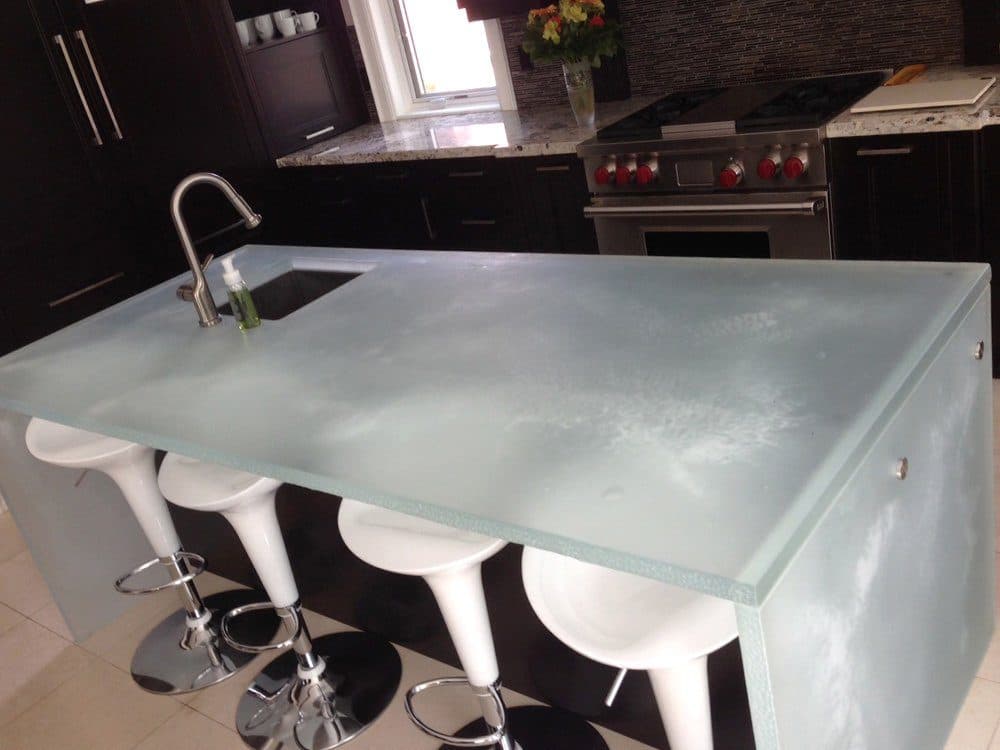
Recycled glass countertops are all the rage in modern home decor. It’s eco-friendly, sustainable and helps you portray a “responsible”image of yourself.
But every material has trade-offs. Recycled glass is no different. The trick is understanding where the weaknesses are and how much they matter in daily use.
Let’s start with the basics first.
Quick Explanation of What Recycled Glass Countertops Are
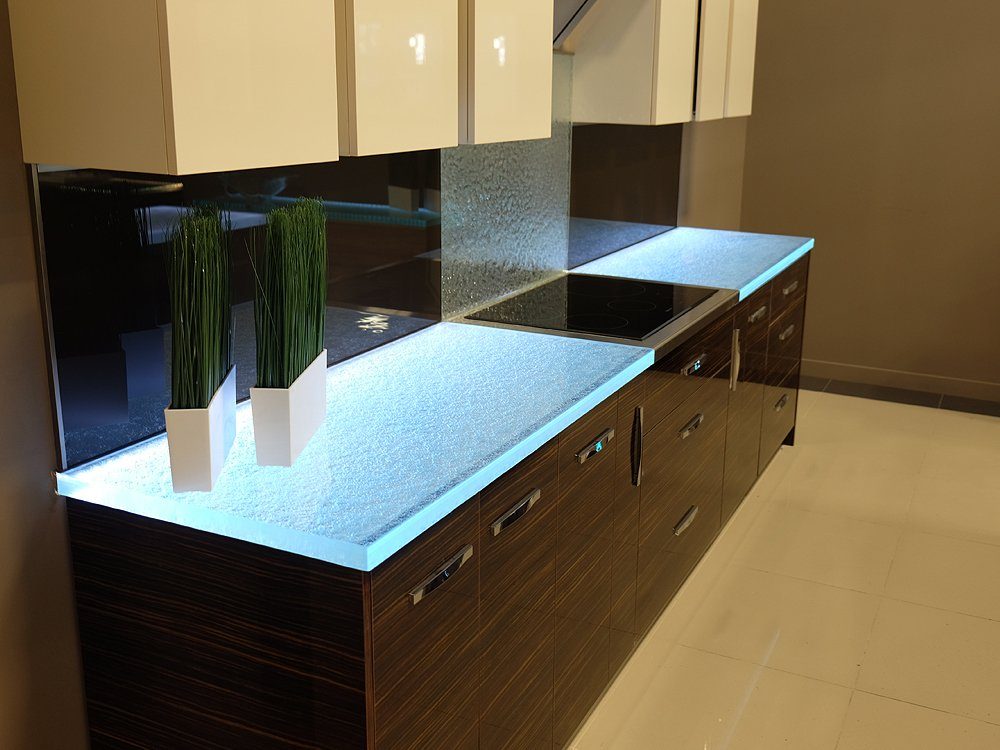
Recycled glass countertops are simply surfaces made from discarded glass pieces that are crushed and reused.
Most manufacturers collect waste glass from several sources like old bottles, broken windows, leftover glass from factories, etc.
The glass is then crushed into small chips. Sometimes it looks like colorful pebbles or rare jewels shining underneath the surface.
Those pieces are then embedded into a binder. The binder is what holds everything together and forms a solid slab.
Three Disadvantages of Recycled Glass Countertops
Let’s break down the three issues homeowners most commonly run into.
They Can Be Expensive
Many people assume recycled materials should be cheap. But that’s a myth. In reality, recycled glass countertops are often more expensive than expected.
Typical installed prices range between $80 and $150 per square foot. Why is it so expensive?
Because the manufacturing process is a bit complex. To start manufacturing, glass must be collected and sorted. Then, it has to be cleaned thoroughly. Next, glass is crushed and graded by size. Finally, the mixture is cast into molds. The slabs are cured, cut, and polished.
You see, each step requires equipment and labor.
There are also fewer manufacturers compared to materials like quartz. So, lower supply usually means higher prices.
Cement-based Versions Can Be Fragile
Concrete sounds strong. But in thin countertop slabs, it behaves differently.
Cement-based recycled glass countertops can sometimes develop:
- hairline cracks
- small chips at edges
- surface pitting over time
This happens because concrete is rigid but brittle.
For example: if a heavy cast-iron pot drops on the counter edge, the glass fragments are usually fine. But the surrounding cement may chip.
Resin Binders May React To High Heat
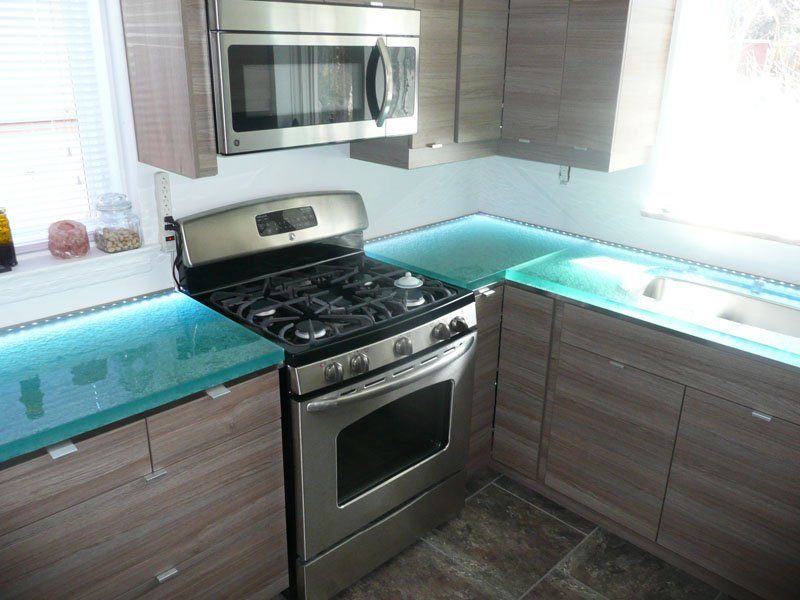
Now we get to the opposite problem.
Resin countertops are usually stronger and less porous than cement ones. But they have one weakness. That’s Heat.
The thing is, resin is a polymer. When exposed to high temperatures, it can soften or discolor.
That means placing a hot pan directly from the stove onto the surface can cause damage. You might see faint burn marks, dull spots or slight warping in extreme cases.
It does not happen every time. But repeated heat exposure can increase the risk.
Final thought
Higher cost, fragility, and heat sensitivity, are some of the disadvantages of recycled glass countertops.
But none of these are deal-breakers. Many homeowners happily live with them for decades.
The key is simply knowing how the material behaves and using it the right way.